
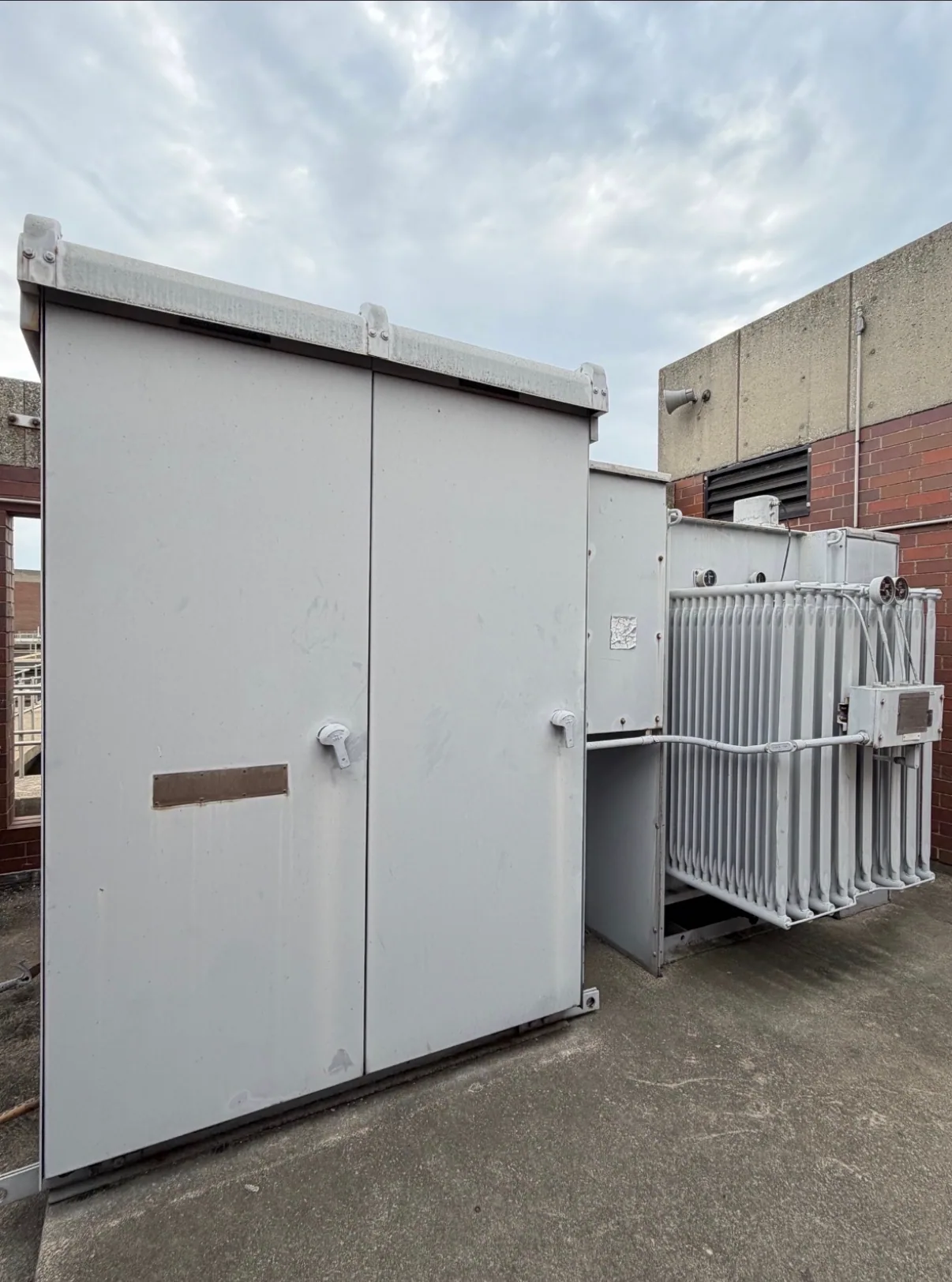
Reading, PA · Substations
Reading, PA: Substations Purchase and Removal
Substations coming out of a Reading facility is worth quoting even when it is decades old. Condition, whether the model is still supported and copper content move the number far more than age, and we will tell you honestly whether your units resell into service or price closer to recovered metal.
Same-day written offer
Get a Written Offer
Send the asset list, or just describe what is in the room. We come back the same business day with a written, itemized offer.
Faster: call 954-740-1983
Email an asset list to electricalequipmentbuyers@gmail.com
Mon–Sat, 7am–7pm ET. We never resell your contact information.
- Location
- Reading, PA
- Equipment
- Substations
- Ratings
- Complete unit and station substati
- Offer
- Same business day
- Removal
- Our crews
- Phone
- 954-740-1983
Equipment
Substations we buy in Reading
Pennsylvania supplies the oldest and frequently the most valuable equipment we buy, because obsolete is not the same as worthless. The steel and coke legacy around Pittsburgh and up the Monongahela, the Lehigh Valley cement and steel corridor, and the anthracite-era industrial towns along I-81 left behind switchgear and busway from vintages nobody manufactures — which is exactly why plants still running that gear pay real money for sections and plugs. Philadelphia adds refinery and port infrastructure on the Delaware, a large hospital and university building stock, and mill buildings being converted throughout Kensington and Manayunk. Erie machinery, the natural-gas processing build-out across the northern tier, and continuous distribution replacement by PPL and Duquesne Light keep the flow steady. Pennsylvania is also where the Turnpike geography lets one crew work Pittsburgh and Philadelphia in the same week. For Reading specifically, that density helps: crews already move through Philadelphia, Pittsburgh, Allentown, Erie and Scranton, so mobilization is a scheduling question rather than a cost problem.
For Reading sites we quote two ways when it helps: a single number for the scope as it stands, and a line-by-line itemization showing what the switchgear, the transformers, the panelboards and the cable each contribute. Some teams need the lump sum to move an approval; others need the detail for their asset records. You can have both.
| Item | Detail |
|---|---|
| Ratings | Complete unit and station substations |
| Scope | Up to 138 kV primary |
| Nameplates | ABB, GE, Siemens, Square D, Eaton, Federal Pacific, Powell, Delta Star, Waukesha |
| Condition | Working, retired, water-damaged or already dismantled |
| Minimum | One section, one unit, or a whole plant lot |
Valuation
What it is worth
Three things drive the number: condition, whether the equipment is still supported, and copper content. A medium-voltage line-up with current vacuum breakers and a recent test report prices as reusable equipment. An identical structure with obsolete air-magnetic breakers and no nameplate prices on its bus and steel. We tell you which bucket your Reading gear falls into before you commit to anything.
Pennsylvania note
Pennsylvania supplies the oldest and frequently the most valuable equipment we buy, because obsolete is not the same as worthless. The steel and coke legacy around Pittsburgh and up the Monongahela, the Lehigh Valley cement and steel corridor, and the anthracite-era industrial towns along I-81 left behind switchgear and busway from vintages nobody manufactures — which is exactly why plants still running that gear pay real money for sections and plugs. Philadelphia adds refinery and port infrastructure on the Delaware, a large hospital and university building stock, and mill buildings being converted throughout Kensington and Manayunk. Erie machinery, the natural-gas processing build-out across the northern tier, and continuous distribution replacement by PPL and Duquesne Light keep the flow steady. Pennsylvania is also where the Turnpike geography lets one crew work Pittsburgh and Philadelphia in the same week.
Related
Related pages
Not in Reading? These are close:
Common questions
Questions
What happens to the equipment after you buy it?
Serviceable gear is tested, reconditioned where needed and resold as replacement equipment — that resale is what funds your offer. What cannot go back into service is dismantled for copper, aluminum and steel recovery through permitted processors, with regulated fractions documented.
Do you buy equipment that is still energized and in service?
Yes, and most of what we buy is. We quote it now and remove it on your cutover date. Telling us at the quote stage which Reading assets are still live lets us build the phasing and the clearance coordination into the schedule from the beginning.
Our electrical room is in a basement with a tight door. Is that a problem?
It is routine. Switchgear sections, transformers and gensets frequently have to be cut down or partially disassembled to clear a door width, an elevator limit or a stair turn. The access survey at your Reading site establishes the path before we commit to a date, and that cost is already inside the offer.
Will you take the equipment we cannot sell along with the good items?
Yes, and this is usually why sellers choose us. Cherry-picking leaves you holding the leftovers of the leftovers. We price the Reading lot as a whole — good gear, obsolete gear and the scrap fraction together — so the electrical room ends up genuinely empty.
Substations in Reading?
One written offer covering purchase, removal and freight.