
Buffalo, NY · Panelboards & Switchboards
Buffalo, NY: Panelboards & Switchboards Purchase and Removal
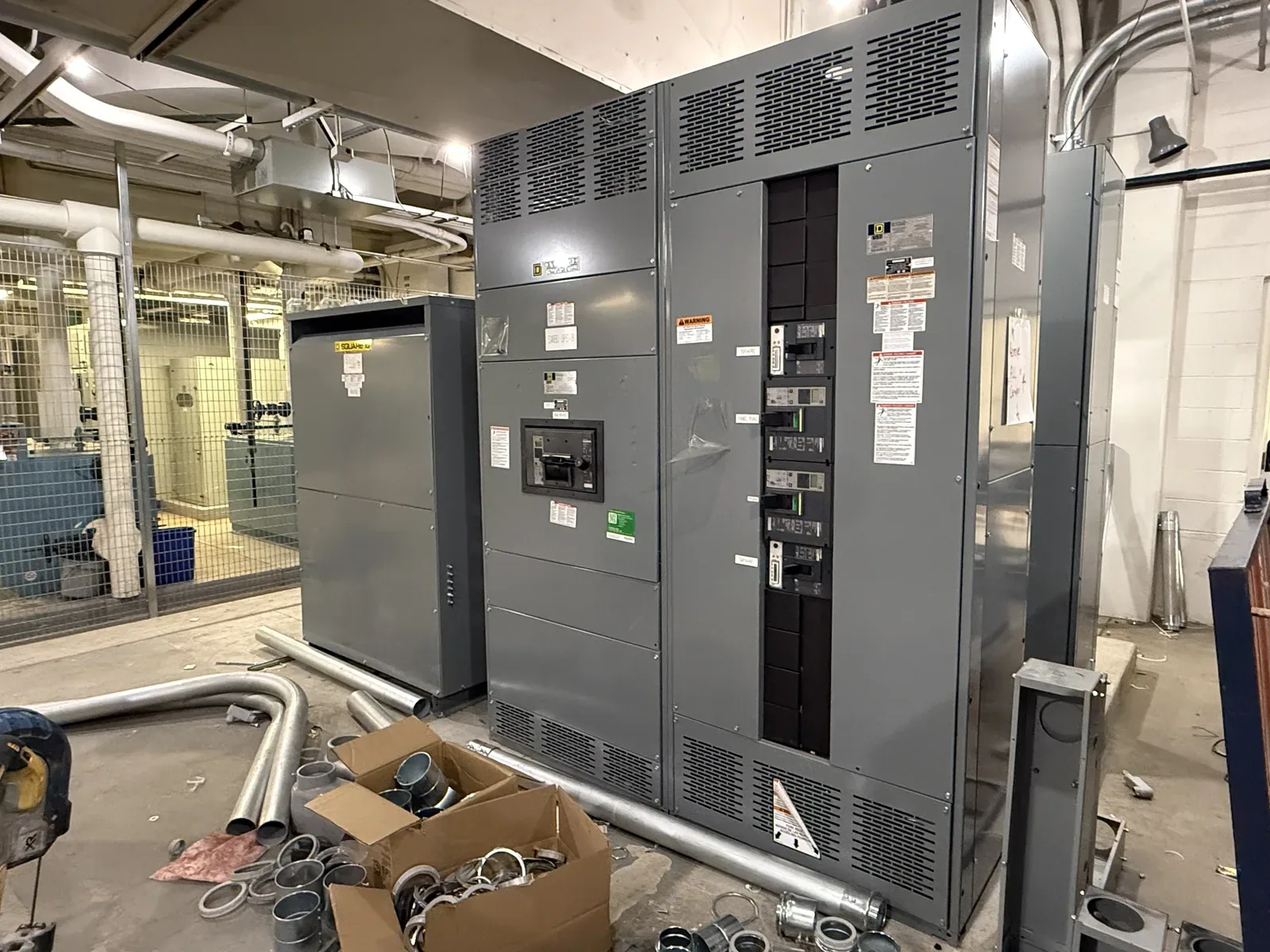
We purchase electrical panels throughout Buffalo and the surrounding New York market — units still energized and scheduled for replacement, equipment already sitting dead after an upgrade, and lots coming out of a full plant closure. We buy the gear and we do the removal: one company, one offer, one certificate of insurance.
Same-day written offer
Get a Written Offer
Send the asset list, or just describe what is in the room. We come back the same business day with a written, itemized offer.
Faster: call 954-740-1983
Email an asset list to electricalequipmentbuyers@gmail.com
Mon–Sat, 7am–7pm ET. We never resell your contact information.
- Location
- Buffalo, NY
- Equipment
- Panelboards & Switchboards
- Ratings
- 100 A – 4,000 A
- Offer
- Same business day
- Removal
- Our crews
- Phone
- 954-740-1983
Equipment
Panelboards & Switchboards we buy in Buffalo
New York is two completely different jobs sharing a state line. In the five boroughs and the lower Hudson Valley the work is vertical and permit-heavy: switchboards and busway risers coming out of pre-war commercial buildings, hospital and university plants replacing essential-power systems, and Con Edison network gear on a renewal cycle that never really stops. Freight elevators, night windows and street-level staging decide the schedule far more than the rigging does. Upstate is horizontal and industrial — the Buffalo and Niagara Falls electrochemical and metals legacy, Rochester optics and imaging plants that have been shedding infrastructure for two decades, Syracuse and Utica manufacturing, and the semiconductor and battery build-out that is now retiring the gear it replaced. Bus duct is unusually common in both halves, because so much of this building stock was wired when busway was the standard answer. For Buffalo specifically, that density helps: crews already move through New York City, Buffalo, Rochester, Syracuse and Albany, so mobilization is a scheduling question rather than a cost problem.
If the Buffalo equipment is still carrying load, we phase it. Usually that means dead sections and spares first, then distribution as circuits are released, then the main line-up once the last feeder is isolated. The phasing goes into the offer so nobody is improvising in an energized room at two in the morning.
| Item | Detail |
|---|---|
| Ratings | 100 A – 4,000 A |
| Scope | Panelboards, switchboards, distribution |
| Nameplates | Square D NQOD & I-Line, GE, Siemens, Eaton, Cutler-Hammer, Federal Pacific, Zinsco, Westinghouse, Murray, Challenger |
| Condition | Working, retired, water-damaged or already dismantled |
| Minimum | One section, one unit, or a whole plant lot |
Valuation
What it is worth
Copper is the floor under most of this equipment, and it is a floor that moves. Bus bar, windings and feeder cable set a minimum value we can always pay on a Buffalo lot; resale demand for the specific make and model is what lifts the offer above it. Obsolete breakers and discontinued panelboard interiors are the clearest example — unglamorous parts that plants cannot buy new anywhere.
New York note
New York is two completely different jobs sharing a state line. In the five boroughs and the lower Hudson Valley the work is vertical and permit-heavy: switchboards and busway risers coming out of pre-war commercial buildings, hospital and university plants replacing essential-power systems, and Con Edison network gear on a renewal cycle that never really stops. Freight elevators, night windows and street-level staging decide the schedule far more than the rigging does. Upstate is horizontal and industrial — the Buffalo and Niagara Falls electrochemical and metals legacy, Rochester optics and imaging plants that have been shedding infrastructure for two decades, Syracuse and Utica manufacturing, and the semiconductor and battery build-out that is now retiring the gear it replaced. Bus duct is unusually common in both halves, because so much of this building stock was wired when busway was the standard answer.
Related
Related pages
Not in Buffalo? These are close:
Common questions
Questions
What happens to the equipment after you buy it?
Serviceable gear is tested, reconditioned where needed and resold as replacement equipment — that resale is what funds your offer. What cannot go back into service is dismantled for copper, aluminum and steel recovery through permitted processors, with regulated fractions documented.
Do you buy equipment that is still energized and in service?
Yes, and most of what we buy is. We quote it now and remove it on your cutover date. Telling us at the quote stage which Buffalo assets are still live lets us build the phasing and the clearance coordination into the schedule from the beginning.
Our electrical room is in a basement with a tight door. Is that a problem?
It is routine. Switchgear sections, transformers and gensets frequently have to be cut down or partially disassembled to clear a door width, an elevator limit or a stair turn. The access survey at your Buffalo site establishes the path before we commit to a date, and that cost is already inside the offer.
Will you take the equipment we cannot sell along with the good items?
Yes, and this is usually why sellers choose us. Cherry-picking leaves you holding the leftovers of the leftovers. We price the Buffalo lot as a whole — good gear, obsolete gear and the scrap fraction together — so the electrical room ends up genuinely empty.
Panelboards & Switchboards in Buffalo?
One written offer covering purchase, removal and freight.